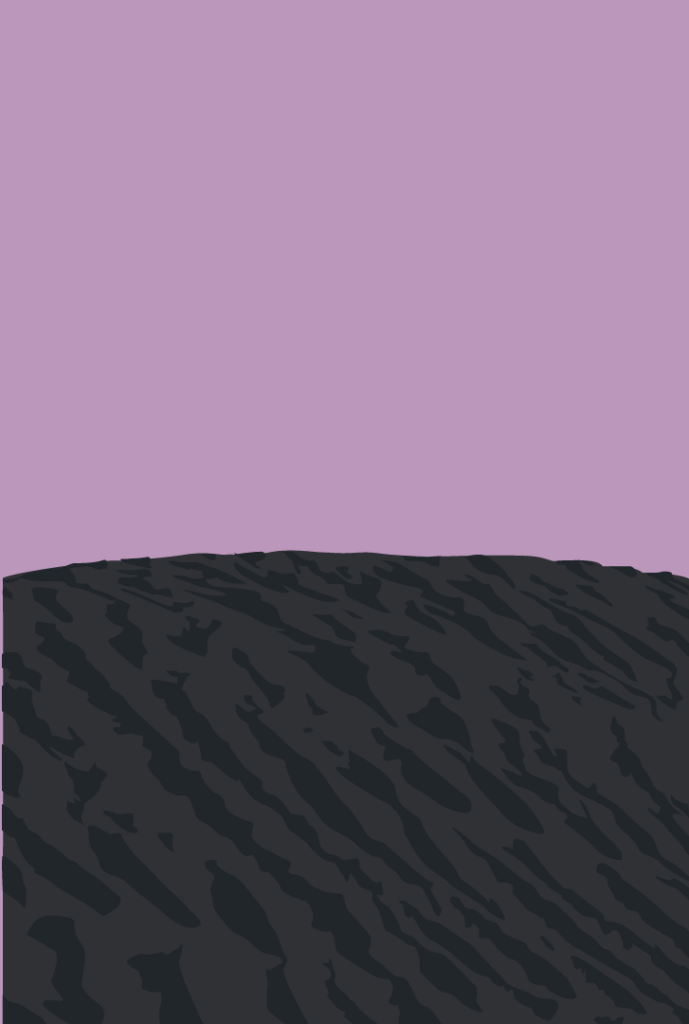
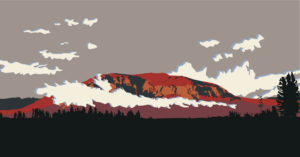
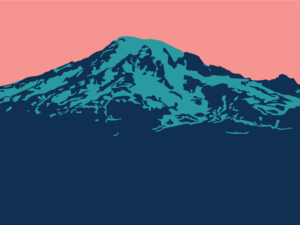
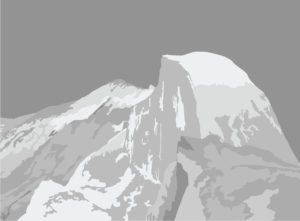
A single dune rising into an empty sky, with wind and shadow doing all the describing.
Notes
The dune keeps its secrets
A dune is just sand arranged by wind, but that arrangement can carry an astonishing amount of shape. The slope rises from the bottom of the frame and stops at a low, uneven horizon, leaving the sky to make the dune feel larger than it actually is.
The surface is where the movement lives. Long bands and broken ridges run diagonally across the face, following the direction of the wind without ever becoming a literal pattern. The dune stays still, but everything in the drawing suggests that it is being rebuilt one grain at a time.
The palette is deliberately narrow. Violet opens up the sky, charcoal gives the sand its weight, and near-black marks the folds, ridges, and deeper pockets where the light cannot reach. There is no need for a sunset or a distant landmark. The surface has enough drama already.
The fun was treating sand like a landscape with architecture: a broad plane, a hard edge, and enough internal variation to keep the eye moving. Simplify it too much and it becomes a triangle. Give it too much detail and it stops being a dune.