Palette
| Blue | #8AC8E0 | |
| Mid grey | #887A70 | |
| Muted ochre | #BBB5A5 | |
| Pale yellow | #F2F5DE |
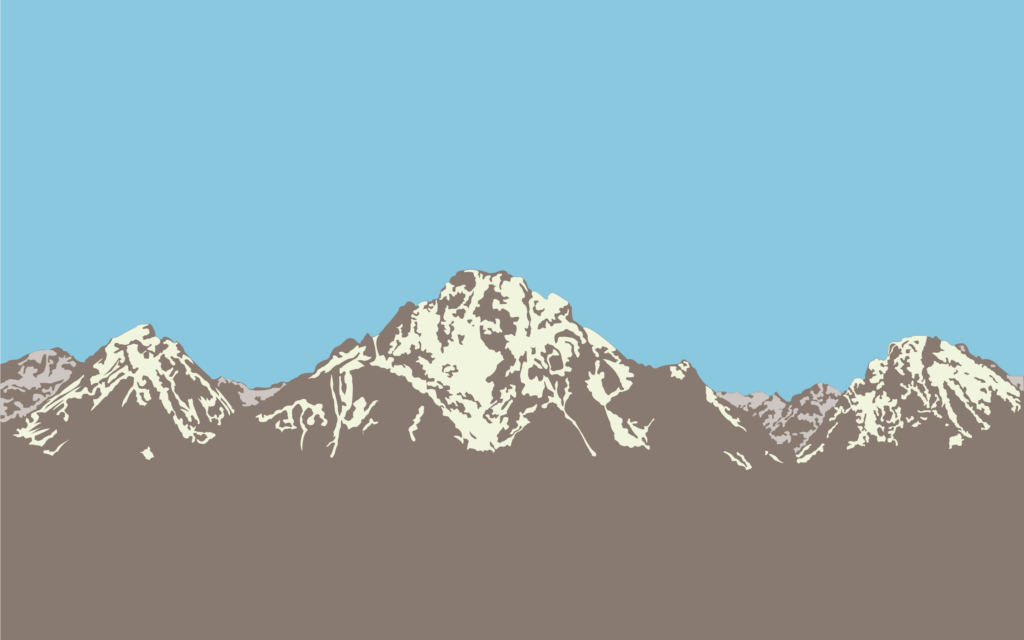
Four colors, flat midday light, and a range that only exists because of where the snow stuck.
Notes
The snow is doing all of it
The mountains and the ground in front of them are the same brown. Not similar – identical. Cover up the cream and the bottom half of this picture is one shape. Every peak, every ridge, every bit of relief in the range is coming from where the snow is and nowhere else.
That works because snow isn’t random. It survives where the sun doesn’t reach and collects where the wind drops it, which means it fills gullies, north-facing bowls, and the lee side of every ridge. So a snow pattern is a readout of a mountain’s shape – the couloirs are white because they’re steep and shaded, and the faces are bare because they aren’t. Draw the snow accurately and the rock comes along with it.
Flat midday light is what makes it possible. No cast shadows, no warm side and cool side, nothing modeling the form. Photographers wait that kind of day out. It’s useful here for the same reason it’s useless there: with the light contributing nothing, the range reduces to two flat fields and a pattern, which is roughly where I want most things to end up anyway.
Four colors. Sky, brown for rock and foreground both, cream for snow, and a paler grey holding the ridges at either end back in the distance. That fourth color is the only depth cue in the piece – everything else sits on one plane. The snowfields took all the time. They’re a few hundred separate shapes and none of them can be invented, because the moment one reads as decorative the whole mountain stops being a mountain.