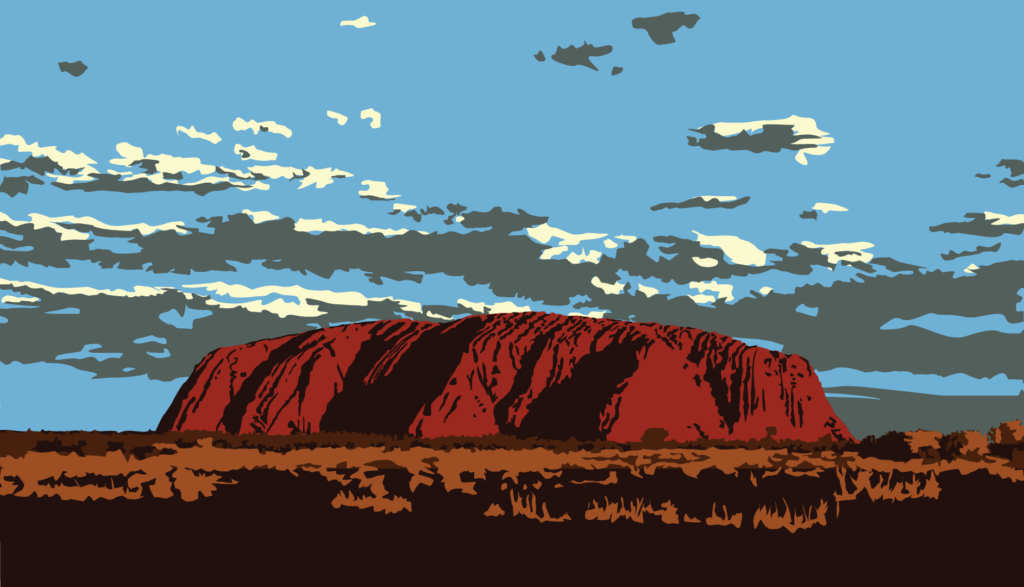
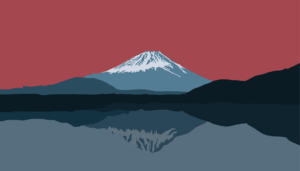
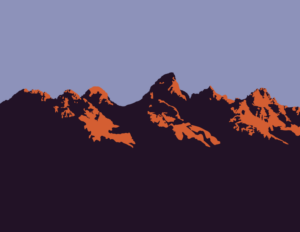
Uluru at last light. Not a boulder someone left in the desert – the top of something much bigger that declined to stay buried.
Notes
No foothills, no warning
Uluru arrives in your head prepackaged. Everybody’s seen it. So what got me wasn’t the rock, it was the abruptness – flat scrub, flat scrub, flat scrub, and then 1,142 feet of red going straight up with no foothills, no buildup, nothing easing you into it.
First thing worth saying: this is Anangu country, and it has been for tens of thousands of years. The rock isn’t scenery to the people whose home it is – it’s tied to Tjukurpa, the law and knowledge that orders their world. The climb closed permanently in 2019 at their request. There are sections where photography is restricted, because certain sites are meant to be seen by certain people and not published to everyone with a phone.
The geology only makes it stranger. What’s visible is the exposed top of a tilted slab of arkose sandstone that keeps going several kilometers underground. Almost six miles around at the base. The red isn’t even the rock’s real color – it’s rust, iron oxidizing on the surface of stone that’s grey underneath. The dark grooves are runoff channels, and after a hard rain they run as waterfalls. Ordinary scrub in every direction, and then this, declining to match any of it.
Seven flat colors, no gradients. Two reds carry the rock, a near-black takes the grooves, ochre and brown handle the plain, and the sky got three values because the sky was being difficult. The clouds took the longest. The rock is six big shapes and a silhouette that does most of the work.